Oil's surplus is real, but it is not a demand bust
Monday, Nov. 16, 2026 — Oil is being priced as if a fresh surplus has settled the argument, but that goes too far. The bearish balance story is real; the weaker read is that it proves demand has broken.
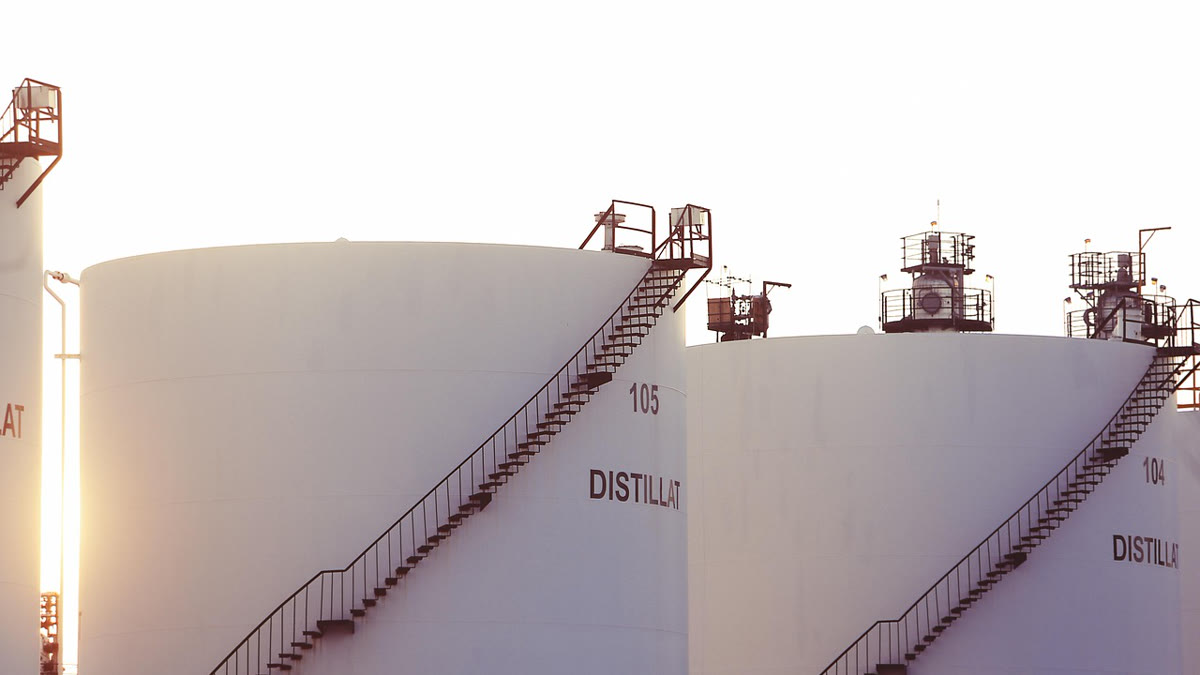
Oil is being priced as if a fresh surplus has settled the argument. We think that goes too far. The bearish balance story is real, and we should not duck it. More crude is coming back, global inventories have started to rise and the IEA says the market has moved back into surplus in the fourth quarter. But that is not the same thing as saying the end-market has fallen apart.
Our view is simple: this is a supply-overhang market sitting on top of still-solid processing activity. The prevailing interpretation is the cleaner bearish one. The IEA said the global oil market has returned to surplus in 4Q26, observed inventories rose by 52 million barrels in October for the first increase since June and a larger build is in view for 2027. In the US, commercial crude stocks rose by 4.7 million barrels on the latest week in the EIA report. By Monday at 16:01 UTC, Brent was down 2.32% at $93.62 even with headlines about risk to Saudi exports. That reading is partly right. What it assumes, though, is that every stock build is a demand signal and that crude inventories alone tell us where physical tightness sits. The barrel mix says otherwise.
The balance has loosened, and the bears have evidence
Start with the global case, because that is where the bear story is strongest. The IEA says world oil demand is forecast to fall by 2.7 mb/d in 2026, while global oil supply rose to 105.4 mb/d in October, putting the market back into surplus in 4Q26. That is not a trivial shift. It means supply has overtaken demand at the aggregate level.
The supply side is not abstract either. Bloomberg reported Saudi Arabia raised October crude output by 2.19 mb/d to 10.56 mb/d, helping take OPEC+ production up by 2.04 mb/d. More barrels from the largest swing producer bloc are exactly what a surplus needs in order to become visible in tanks and in price.
The inventory signal has also turned. The IEA said observed global oil inventories rose by 52 million barrels in October, the first increase since June. That is why flat-price crude has struggled to hold up. The market is not inventing this surplus.
The US picture is looser in crude, not broken in demand
Where we part company with the easy bear read is in the US details. US Energy Information Administration data compiled by GoldSquawk showed US commercial crude stocks at 414.4 million barrels, up 4.7 million on the week, but still 4% below the five-year average and 3.1% below a year earlier. The EIA’s monthly outlook also notes inventories fell to 410 million barrels at the end of October, the lowest end-October level since 2014. So yes, crude has started to build. No, it is not building from a bloated base.
More important, refiners are still running hard. US refinery utilisation is 95.2%, up 0.7 percentage points on the week and 6.2 points above the five-year average of 89.0%. That does not fit a story of vanishing end-demand. It fits a system still incentivised to turn crude into products. The EIA itself expects elevated refinery operations to persist because wider product crack spreads are encouraging them.
Demand proxies are hardly booming, but they are not collapsing either. US total products supplied averaged 20.79 mb/d over four weeks, which is 0.6% above the five-year average. That is a middling, not disastrous, reading. Outside the US, India’s October diesel demand was 8.51 million tonnes, up 11.7% from a year earlier, while petrol demand was 3.78 million tonnes, up 3.1%, even though jet fuel fell 1.4% and LPG fell 12.1%. Again, the message is not strength everywhere. It is that weakness is uneven.
The barrel mix is where the glut story goes wrong
If you only look at crude, you miss where tightness still sits. US distillate inventories are 103.3 million barrels, up 4.1 million on the week, but still 8% below the five-year average and 6.8% below a year earlier. The EIA’s weekly report also shows distillate stocks below year-ago levels across the East Coast, Midwest, Gulf Coast, Rocky Mountain and West Coast regions. That is not a local quirk. It is broad relative tightness in the middle of the barrel.
Gasoline looks different. Stocks are 210.8 million barrels, 1% above the five-year average. Crude at Cushing looks different too. The WTI delivery hub holds 27.4 million barrels, 10% above its five-year average. Net crude imports are 2.44 mb/d on a four-week average, with imports at 6.30 mb/d and exports at 3.86 mb/d. Put those pieces together and the story sharpens: crude is easier, gasoline is comfortable, but distillates are still relatively snug.
That is why calling this a uniform glut is sloppy. Even the IEA notes global refinery runs fell by 1.3 mb/d month on month to a seasonal low of 81.3 mb/d in October, before a forecast rebound to 84.7 mb/d in December. Some of the surplus is about processing timing and product incentives, not just a dead end-market.
What the market should watch now
The strongest evidence against us is real. The IEA sees surplus now and bigger builds in 2027. Saudi and OPEC+ supply has jumped. US crude and gasoline have both built, and Cushing is above its historical norm. Monday’s price action was blunt: Brent was falling even with geopolitical risk in the background. That keeps us from pretending flat-price crude has found a floor.
But if we are right, crude’s downside is less durable than the headline surplus story suggests. The better tell will be product cracks, refinery margins and whether refiners keep running near 95.2% rather than rolling over. A real demand bust would show up in weaker products supplied, softer refinery utilisation and distillate stocks moving back towards normal, not just in another crude build. If those do not crack, the market will have to admit that this is not one big glut. It is a looser crude balance sitting on top of a still-working barrel system.
Key data
| Measure | Value | Source |
|---|---|---|
| Refinery utilisation | 95.2% | US Energy Information Administration, via GoldSquawk data |
Primary sources
- International Energy Agency · Oil Market Report - November 2026
- U.S. Energy Information Administration · Weekly Petroleum Status Report
- U.S. Energy Information Administration · Short-Term Energy Outlook
- GoldSquawk data: US oil demand (US Energy Information Administration); Refinery runs (US Energy Information Administration); US crude stocks (US Energy Information Administration); US distillate stocks (US Energy Information Administration)
General market commentary only. Not financial advice.