Oil's real bull is diesel, not Hormuz
On Friday, Oct. 30, 2026, the oil market was still staring at the Strait and missing the tank. The real bull case sits in diesel and refining, not in another round of crude panic over Hormuz, and that matters because diesel scarcity is what keeps the whole complex expensive.
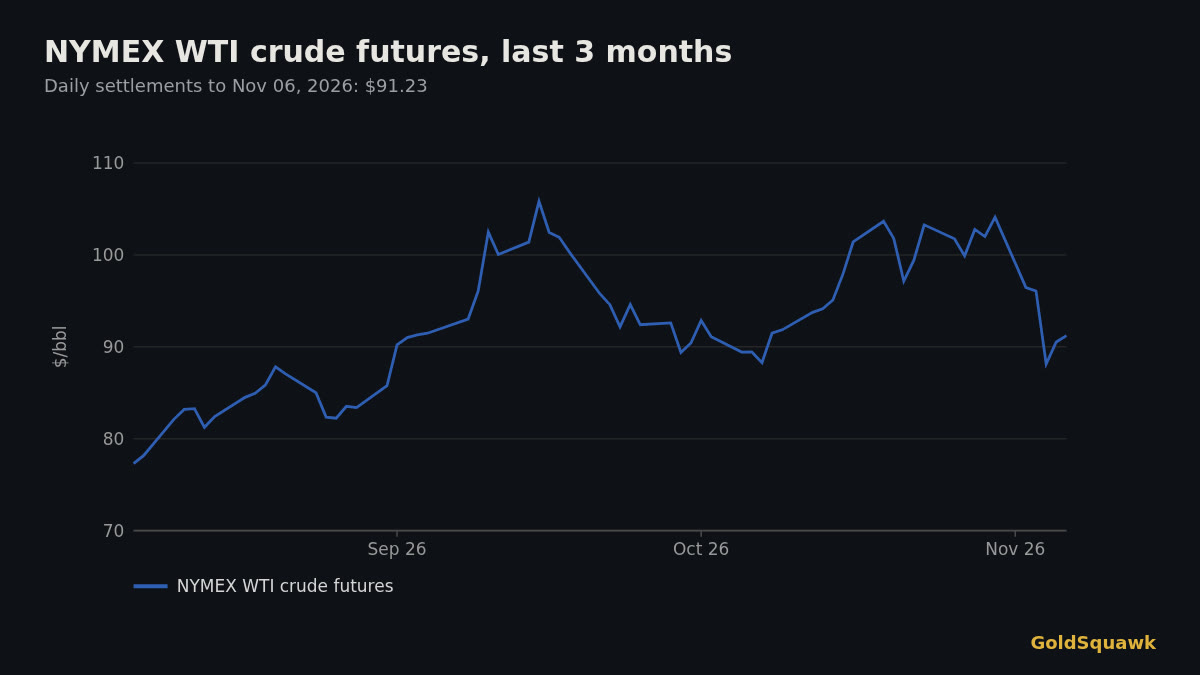
The oil market is still staring at the Strait and missing the tank. We think the real bull case sits in diesel and refining, not in another round of crude panic over Hormuz. Crude can wobble with every diplomatic hint. Diesel scarcity is what keeps the whole complex expensive.
The view we are arguing against is the one reflected by Reuters and AP: that oil is being driven mainly by the Iran war, Strait of Hormuz disruption and broader crude supply shocks, with product tightness as a side issue, according to Reuters. AP likewise said Brent and US crude were both above $100 a barrel on Friday, with Hormuz risk still in the background. That framing is too crude, literally. Friday’s evidence points to the tighter trade being middle distillates.
The earnings told us where the squeeze is
Start with the companies that actually turn crude into usable fuel. Chevron beat earnings expectations as refining profits soared on high diesel fuel prices, according to CNBC. Exxon chief Darren Woods was even blunter: diesel is the key crunch point, and demand remains high despite capacity, according to Bloomberg.
That is not a small nuance. It means the margin is sitting in the barrel after crude leaves the wellhead. Reuters said soaring refining margins lifted fuel-making earnings at Exxon and Chevron to levels that rivalled upstream profits. If the tightest part of the chain were simply crude supply, upstream would be the whole story. It is not.
The retail signal says the same. US diesel prices were about $6.32 a gallon, up 71% from a year earlier, according to AP. That is what a real shortage looks like in the end market: not just expensive crude, but a product price that has outrun it. AP also reported Exxon’s US Gulf Coast refineries were running at 100% utilisation and Gulf Coast diesel output was the second-highest on record. When plants are flat out and output is near records, yet diesel is still screaming higher, the constraint is not lack of effort. It is structural tightness.
Reuters added another useful clue: Brent swung from $68 to $132 during the quarter. That range tells us crude headlines are violent. It also tells us why the market keeps misreading the move. The noisy part is crude. The sticky part is products.
Stocks are low even with refineries running hard
The inventory data make the same case, and more cleanly. US distillate stocks stood at 99.3m barrels, down 3.56m on the week and 13% below the five-year average, according to the US Energy Information Administration. That matters because a low stock number is not just scarcity in theory. It is less buffer in the fuel that trucking, industry and winter heating lean on.
Now look at how hard refiners are already pushing. US refinery utilisation was 94.5%, up 1.7 percentage points on the week and well above the five-year average of 87.8%, according to the US Energy Information Administration. In other words, the system is already being run hot. Yet distillate inventories still fell. Bears who think crude weakness will automatically fix product tightness are assuming spare refining relief that the data do not show.
The broader backdrop is not soft either. US total products supplied, a proxy for implied oil demand, was 21.19m barrels a day on a four-week average, 3.9% above the five-year average and up 0.14m barrels a day over four weeks, according to the US Energy Information Administration. Demand is not rolling over.
The EIA has already sketched the bigger picture. It said US refinery utilisation averaged more than 95% of capacity between May and September, the highest for those months since 1998. It also said tight global product supplies boosted margins for petroleum products, especially diesel, and that US refinery runs were driven largely by tight global distillate supplies and strong export demand. Most important for what comes next, the EIA said distillate demand peaks in autumn and winter. So the seasonal hand-off is not towards relief. It is towards more stress.
Russia is squeezing the product market
The supply risk on Friday also landed in diesel, not just crude. Russia plans to extend its ban on diesel exports, with certain exceptions, until the end of January, according to Bloomberg. At 14:46 UTC, Deputy Prime Minister Alexander Novak added that attacks on oil refineries will have a negative impact on diesel fuel supplies to the global market, according to Bloomberg.
That matters more than another round of generic crude-war chatter because diesel export limits bite directly into the product market that is already short. Reuters had reported a day earlier that Russia’s current diesel export ban was due to expire on Oct. 31 and that export controls were linked to domestic fuel shortages. Friday’s extension beyond year-end and into January is the opposite of relief.
Reuters also said attacks on refineries in Saudi Arabia and Russia had knocked out fuel-making capacity and pushed refining margins sky-high. Again, the pinch point is not simply molecules in the ground. It is usable barrels out of refineries.
What tests this trade next
If our thesis is wrong, the refutation will not come from a calmer Hormuz headline. It will come from diesel actually loosening. That means distillate stocks rebuilding from 99.3m barrels rather than drawing further, according to the US Energy Information Administration. It means refinery utilisation near 94.5% finally translating into comfort instead of stress, according to the US Energy Information Administration. It means Russia easing product restrictions rather than extending them to January, according to Bloomberg.
Until then, we would treat dips in crude as wobble, not cure. The next real test is simple: can a market already running refineries this hard rebuild diesel stocks as winter demand arrives?
Key data
| Measure | Value | Source |
|---|---|---|
| US refinery utilisation | 94.5% | US Energy Information Administration |
How the story unfolded
- Oct. 30, 2026, 10:21 GMT · CHEVRON: Beats earnings expectations as refining profits soar on high diesel fuel prices (CNBC)
- Oct. 30, 2026, 12:19 GMT · EXXONMOBIL CEO DARREN WOODS: Diesel is the key crunch point; demand remains high despite capacity - Bloomberg (Bloomberg)
- Oct. 30, 2026, 12:37 GMT · RUSSIA: Plans to extend ban on diesel exports, with certain exceptions, until end of January - IFX - Bloomberg (Bloomberg)
- Oct. 30, 2026, 14:46 GMT · RUSSIA: Novak says attacks on oil refineries will have negative impact on diesel fuel supplies to global market - Bloomberg (Bloomberg)
Primary sources
General market commentary only. Not financial advice.