Oil is pricing Gulf-wide infrastructure risk
Sunday, Nov. 8, 2026 — Oil is pricing Gulf-wide infrastructure risk, not just a Hormuz bottleneck. This week’s attacks and incidents stretch from waters off Qatar and Oman to Saudi assets on land, and the market is already charging for the corridor.
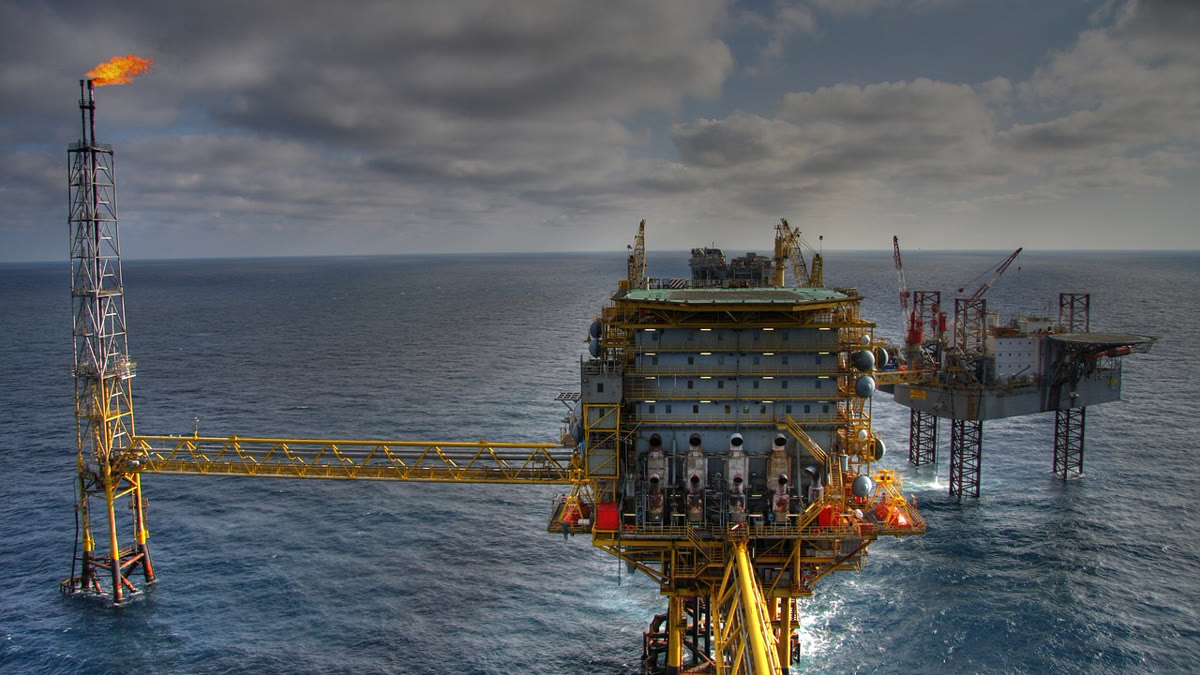
The market is still being told to stare at Hormuz. We think that map is now too small. This week’s attacks and incidents show that oil risk is not confined to one narrow strait; it is spreading across a Gulf corridor that runs from waters off Qatar and Oman to Saudi assets on land. Insurers, shipowners and refiners are, in practice, underwriting a regional infrastructure chain, not a single chokepoint.
The view we are arguing against is the standard bottleneck story. AP called the Strait of Hormuz the “central pressure point” and said the U.S. blockade there aimed to stop tankers hauling Iranian oil from reaching the global market. Reuters said the conflict had effectively stalled flows through Hormuz, a passageway for about a fifth of global oil consumption. Hormuz matters, plainly. But this week’s pattern says the physical risk now sits on a wider map.
This week’s pattern is wider than one strait
Look at the sequence, not the slogan. On Thursday, Nov. 5, 2026, UKMTO said a tanker 50 nautical miles north of Madinat ash Shamal, Qatar, was struck by two unidentified projectiles. On Friday, Nov. 6, 2026, UKMTO reported an explosion at the waterline of a tanker 16 nautical miles east of Khasab, Oman, with the crew safe and the ship able to continue under its own power. On Saturday, Nov. 7, 2026, UKMTO reported an incident involving a bulk carrier and military forces about 18 nautical miles east of Khor Fakkan in the Gulf of Oman. On Sunday, Nov. 8, 2026, UKMTO reported a tanker on fire 8 nautical miles northwest of Khasab, with the crew evacuated. The same day, UKMTO said a tanker transiting outbound in the Strait of Hormuz was struck by an unknown projectile.
That is not a single-point disruption. It is a chain of events stretching from near Qatar to the Omani side of the corridor, with repeated trouble around Khasab and the Gulf of Oman. UKMTO’s own running tally shows 36 incidents reported in the last 30 days as of Nov. 8, 2026. Its recent classifications also spread the risk across an attack in the Central Arabian Gulf on Nov. 5, 2026, an attack in the Strait of Hormuz on Nov. 6, 2026, an advisory in the Gulf of Oman on Nov. 7, 2026, and on Nov. 8, 2026 both an attack and suspicious activity in the Strait.
Even the use of force is not staying inside the strait. AP reported on Friday, Nov. 7, 2026 that the U.S. military fired on a commercial vessel in the Gulf of Oman after it attempted to breach the blockade. If military enforcement, projectile strikes and tanker fires are all appearing across adjoining waters, then the operational risk is corridor-wide by definition.
The supposed escape routes are part of the problem
The lazy answer is that producers can route around Hormuz. That misses where the market has already moved. Reuters reported on Sunday, Oct. 26, 2026 that oil flows through Hormuz were holding at or above pre-war levels, with the geopolitical risk premium showing up in tanker freight rather than crude futures, according to Sparta’s Aaron Kildow. That matters because it says the market’s first response has been to price transport friction, not to mark down barrels that have already disappeared.
Then look at where the rerouting goes. Reuters reported on Thursday, Nov. 6, 2026 that Gulf producers had increased exports through alternative arrangements involving the Gulf of Oman over the prior eight weeks. In the same piece, Reuters said Saudi Arabia was examining options to expand Hormuz-bypass pipeline capacity from about 7 million barrels a day to 10 million barrels a day, citing Aramco chief executive Amin Nasser. In other words, the workaround pushes more strategic weight on to the very waters where this week’s incidents have clustered.
And the other bypass is not clean either. The U.S. Energy Information Administration said attacks on Saudi Arabia’s oil exports through the Bab el-Mandeb reduced exports from Yanbu on the Red Sea, a route designed to bypass Hormuz. The EIA also assumed Middle East oil flows would remain constrained through the fourth quarter of 2026, with shut-in production averaging 5.7 million barrels a day in that quarter. That number is the real warning. It means the official base case is already for a large regional impairment, not a neat Hormuz-only problem.
Crude prices have not dismissed the risk
Price action supports this wider reading, even if it is not yet screaming shortage. WTI was at $88.01 just before the first headline on Thursday, Nov. 5, 2026 and then traded as high as $92.25 by 03:45 UTC on Friday, Nov. 6, 2026, a rise of $4.24 a barrel in less than a day. On Thursday, Nov. 5, 2026, WTI settled near $90.55, up $2.32 or 2.63%, while Brent settled near $98.30, up $3.64 or 3.85%. That was a meaningful repricing of risk, not a shrug.
But the market also stopped short of panic. On Friday, Nov. 6, 2026, WTI settled at $90.88, up only $0.33 on the day, and Brent settled at $98.36, up just $0.06. Bloomberg’s Rob Barnett put the key condition plainly in October: the real upside risk for oil comes only if attacks seriously impair production, refining or exports. We agree. The point is that the market is already charging for the corridor before that worst case arrives, mainly through the transport layer that Reuters and Sparta flagged.
Friday’s macro backdrop makes that stickier premium harder to dismiss. U.S. non-farm payrolls came in at 165,000 against a 65,000 forecast, average hourly earnings rose 0.4% against 0.3%, and unemployment was 4.1% against a 4.2% forecast. Even with that stronger U.S. data in the mix, crude held near $91 in WTI and near $98 in Brent into the close. The geopolitical bid did not vanish.
The next shock would be on land, not just at sea
The clearest sign that this is becoming infrastructure risk, not just shipping risk, came on Sunday, Nov. 8, 2026. Bloomberg reported that a Houthi attack damaged Saudi Aramco Tower in Riyadh’s financial district. Reuters said windows were blown out across several floors of Saudi Aramco’s corporate office after what the Saudi energy ministry said was debris from an attempted attack on the building. AP said Saudi Arabia intercepted incoming missiles targeting the capital and other regions, with falling debris damaging an Aramco building in Riyadh. AP also said there was no immediate claim of responsibility.
There were also unconfirmed reports of a fire at Aramco oil facilities in Abqaiq after attacks on Sunday morning. We cannot use that as evidence. We do not need to. The confirmed pattern is already broad enough: repeated ship incidents near Qatar, Khasab and Khor Fakkan, military action in the Gulf of Oman, and damage to an Aramco building in Riyadh.
What tests this view next is simple. If the next confirmed hit lands on export, refining or production assets — or if the Gulf of Oman reroutes start taking sustained damage — then the market will have to stop pretending it is merely insuring Hormuz headlines and start pricing a genuinely regional infrastructure war.
Key data
| Measure | Value | Source |
|---|---|---|
| UKMTO incidents reported in the last 30 days | 36 | UK Maritime Trade Operations, via GoldSquawk data |
| WTI settled near | $90.88 | GoldSquawk settlement data |
| Brent settled near | $98.36 | GoldSquawk settlement data |
How the story unfolded
- Nov. 5, 2026, 08:20 GMT · SHIPPING: UKMTO reports tanker struck by two unidentified projectiles north of Madinat ash Shamal, Qatar (UKMTO)
- Nov. 6, 2026, 12:07 GMT · SHIPPING: Tanker reports explosion at waterline east of Khasab, crew safe (UKMTO)
- Nov. 7, 2026, 20:47 GMT · US: Central Command says US strikes commercial vessel in Gulf of Oman, disabling it - TASS (TASS)
- Nov. 8, 2026, 07:01 GMT · SHIPPING: UKMTO reports incident involving vessel in the Gulf of Oman east of Khor Fakkan - Fars (Fars)
- Nov. 8, 2026, 09:11 GMT · SHIPPING: UKMTO reports tanker on fire northwest of Khasab, Oman; crew evacuated (UKMTO)
- Nov. 8, 2026, 17:22 GMT · SAUDI ARABIA: Houthi attack damages Saudi Aramco Tower in Riyadh financial district (Bloomberg)
Primary sources
- US Energy Information Administration · September 2026
- GoldSquawk data: Shipping attacks (UKMTO) (UK Maritime Trade Operations)
General market commentary only. Not financial advice.