Oil fell on Iran talks, but Hormuz is still broken
On Thursday, Nov. 5, 2026, oil fell on hopes for US-Iran diplomacy, but the Strait of Hormuz remained badly disrupted and options were still pricing heavy uncertainty. That matters because traders are calling de-risking before shipping conditions have actually normalised.
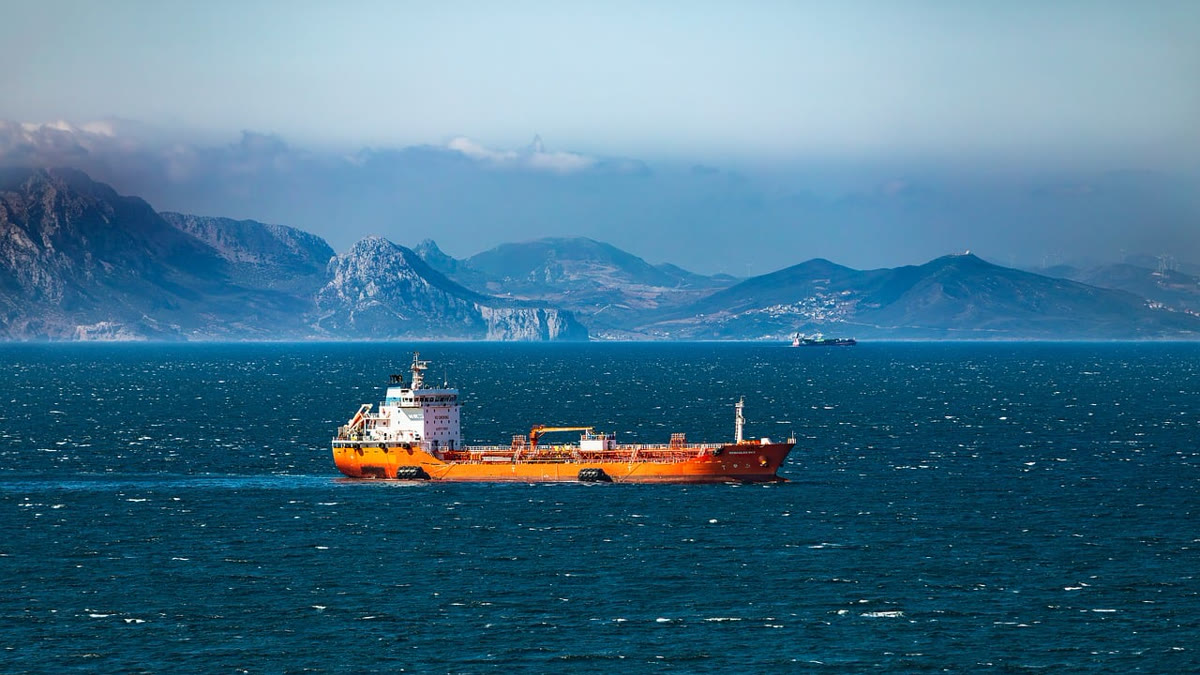
Oil traders have mistaken diplomacy for de-risking. Brent and WTI can drop fast on talk of US-Iran progress, but a market is not de-escalated because officials sound less apocalyptic for a day. It is de-escalated when ships move, attacks stop and volatility comes in. None of that has happened.
The consensus says any sign of talks means the Strait premium can be taken out of oil immediately. Reuters quoted UBS’s Giovanni Staunovo saying oil was dropping as diplomatic talks continued after the previous week’s escalation fears had lifted prices, while Raymond James’ Pavel Molchanov said the market was reacting to progress in US-Iran talks, even as he warned scepticism was warranted after “false dawns” [R1]. We think Molchanov’s warning matters more than the price action. The physical picture still looks broken.
Shipping, not signalling, is the real test
Press TV reported on 31 Oct that UKMTO said traffic through the Strait of Hormuz remained 70% below pre-war levels, which means the route was still operating at barely a third of normal throughput even before this week’s latest headlines [H1]. That is not a cleaned-up risk backdrop. That is a supply artery still badly constricted.
UKMTO is not a rumour mill. It says it is the primary point of contact for emergency response in the region and runs a voluntary reporting scheme for ships there, which is why its traffic and incident data matter more than any triumphant briefing about “progress” [R7]. Its May guidance for Hormuz told vessels to conduct specific threat assessments, exercise heightened caution, monitor VHF Channel 16 at all times and notify UKMTO of attacks or suspicious activity, meaning the official operating assumption was already persistent danger, not normal passage [R6].
As of 5 Nov, UKMTO had recorded 34 incidents in the last 30 days, and its attack tally stood at 26 as the comparison series began to build, which tells us that violence in and around the route is not isolated noise but a sustained campaign of disruption [D2]. A market that strips out the Strait premium while the route is still 70% below normal and incident reports are piling up is trading press releases, not barrels [H1][D2].
The price break ignored what was happening on the water
Reuters said Brent settled down 7.63% at $104.77 a barrel and WTI down 7.36% at $96.46 on 2 Nov as Iran signalled openness to peace talks and hopes rose for an end to the war [R1]. Our market data show the washout kept running: WTI started this period at $102.32 late on 1 Nov and hit $86.66 by 04:58 UTC on 5 Nov, a drop of $15.66, or roughly 15%, in less than four days [P1][P3]. By the 4 Nov settlement, WTI was down $7.93 on the day to $88.23 and Brent was down $9.05 to $94.66, losses of 8.25% and 8.73% respectively, which is what happens when traders yank out geopolitical premium in a hurry [S1][S2].
But the sequence on the water never justified that confidence. UKMTO listed an attack on 30 Oct in which a crude tanker outbound through Hormuz was struck by an unknown projectile, another attack on 1 Nov inside the Strait where a merchant vessel reported another vessel had been hit, and a further attack on 2 Nov in which a tanker east of Ras Al Khafji was struck by two unknown projectiles [R8]. In other words, the market was selling the risk even as the attack tape kept printing.
Then came 5 Nov. Fars reported via the IRGC that two tankers and a tug caught fire in Strait incidents, while Press TV later reported the army said another oil tanker caught fire after striking a naval mine in the eastern Strait [H3][H4]. By 19:01 UTC, Al Jazeera reported Iranian forces said five oil tankers and a tugboat had caught fire in several incidents, including claims that multiple tankers were hit by naval mines [H5][R3]. We do not need to pretend every battlefield claim is perfectly clean to see the point. Shipping was still being hit on the same day traders were meant to believe the route was de-risking.
Options are calling the market’s bluff
If the flat-price selloff really reflected genuine normalisation, options should be calming down. They are not. Cboe’s OVX closed at 60.3 on 5 Nov, up 1.5 points on the day, and 70% of the past year was lower than that, which means implied crude volatility was still sitting in the top 30% of the year’s range [D1]. Cboe’s own measure translated that into an expected daily move of plus or minus $3.47 a barrel, which is not what a normalised market looks like [D1].
Cboe says OVX is its estimate of expected 30-day crude volatility priced by options, so this is not commentary layered on top of price. It is the options market’s own fear gauge [R5]. Last week Cboe also said OVX had jumped by more than 9 points week on week as Brent finished near a one-year high, showing that options traders had already been forced to price a much fatter tail before this week’s diplomatic optimism arrived [R4]. In plain English: the smarter part of the market is still charging heavily for uncertainty.
Demand did not suddenly collapse
The other lazy excuse for the drop is macro. That does not fit either. US ISM manufacturing came in at 55.5 against a 54.5 forecast on 2 Nov, JOLTS openings were 7.52 million against a 7.15 million forecast on 3 Nov, and initial claims were 189,000 against a 197,000 forecast on 5 Nov, all of which point to a US economy that was beating expectations rather than falling over [C2][C3][C8]. Even services, at 54.5 on 4 Nov, was still in expansion territory [C6].
So the sharp fall in oil was not a clean verdict that demand had evaporated. It was a paper-market decision to believe diplomacy faster than shipping conditions improved. Reuters reported on 24 Sep that US and Iranian negotiators were exploring a phased deal to reopen Hormuz, but even there former US negotiator Dennis Ross gave only a 30% chance of an agreement before the vote, and Reuters described the Strait as the central bargaining chip in the talks [R2]. A bargaining chip is not a reopened route.
What tests this view next is not another hopeful leak from a meeting room. It is whether UKMTO’s traffic figure rises materially from 70% below pre-war levels, whether the 34 incidents in 30 days stop climbing, and whether OVX stops pricing daily swings of roughly $3.47 a barrel [H1][D2][D1]. Until those numbers improve, oil may fall on diplomacy headlines, but it has not truly de-risked.
Key data
| Measure | Value | Source |
|---|---|---|
| WTI crude futures start of the period | 102.32 | NYMEX WTI crude futures (GoldSquawk data) |
| WTI crude futures low | 86.66 | NYMEX WTI crude futures (GoldSquawk data) |
| WTI settlement on 4 Nov | $88.23 | GoldSquawk settlement data |
| Brent settlement on 4 Nov | $94.66 | GoldSquawk settlement data |
| UKMTO incidents in 30 days | 34 | UK Maritime Trade Operations |
| OVX close on 5 Nov | 60.3 | Cboe OVX daily closes |
How the story unfolded
- Oct. 31, 2026, 11:24 GMT · SHIPPING: Traffic through Strait of Hormuz remains 70% below pre-war levels, UKMTO says - Press TV (Press TV)
- Nov. 2, 2026, 18:00 GMT · OIL: Brent, WTI plunge nearly 7% as U.S. and Iran signal room for diplomacy (OilPrice.com)
- Nov. 5, 2026, 03:57 GMT · IRAN: IRGC says two tankers and a tug caught fire in Strait of Hormuz incidents; says it took control of two Lucas drones - Fars (Fars)
- Nov. 5, 2026, 10:19 GMT · IRAN: Army says another oil tanker caught fire after striking a naval mine in eastern Strait of Hormuz - Press TV (Press TV)
- Nov. 5, 2026, 19:01 GMT · IRAN: Five oil tankers and a tugboat catch fire in several incidents in Strait of Hormuz (Al Jazeera)
General market commentary only. Not financial advice.