Oil climbs after tanker fires near Strait of Hormuz
NYMEX WTI crude futures later rose as much as $2.49 a barrel on Wednesday after tanker-fire reports near the Strait of Hormuz, as traders weighed fresh disruption risk against a broader supply outlook. The move also comes as flows through the key shipping lane had already been running below pre-war levels.
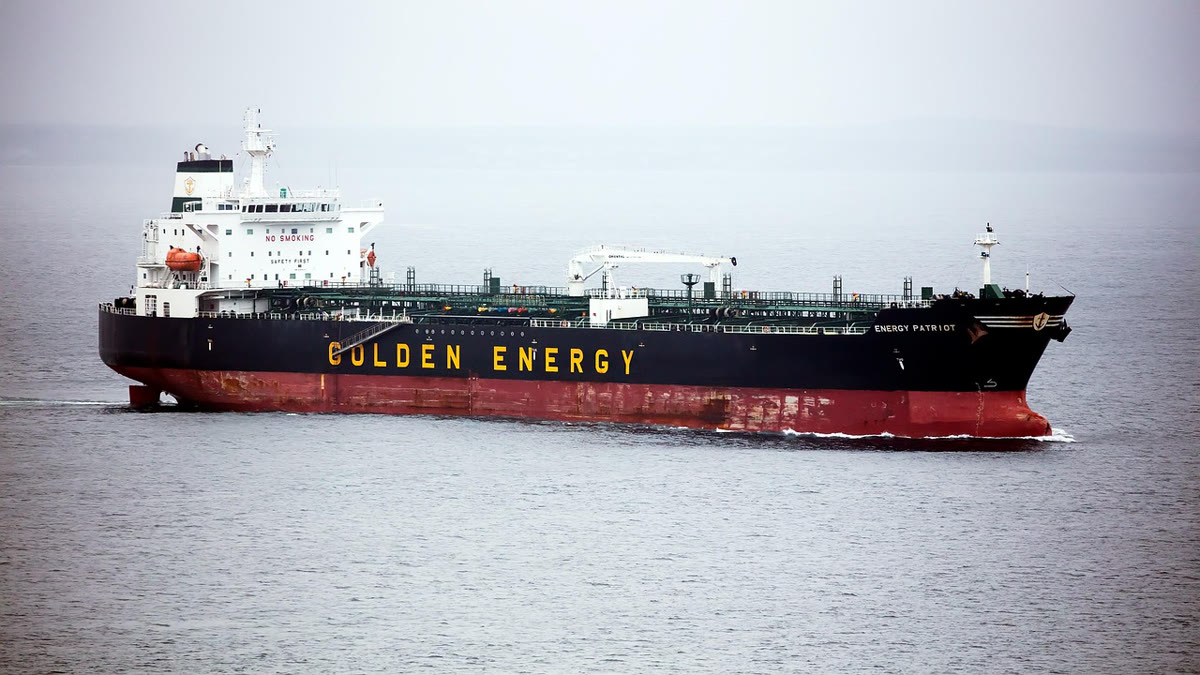
NEW YORK, Nov. 25, 2026 (GoldSquawk) - NYMEX WTI crude futures later rose as much as $2.49 a barrel on Wednesday, climbing from $81.63 before the first tanker-fire headline to $84.12, after Press TV and Fars reported that tankers had hit naval mines and caught fire near the Strait of Hormuz and Reuters later reported a third tanker hit a mine, citing Iran.
For oil traders, the reports sharpened concern around a route that was already moving less crude: the International Energy Agency said Gulf oil exports excluding Oman were 18.4 million barrels a day in October, still 26% below pre-war levels despite continued tanker attacks, and the Associated Press said first-half November flows were around 13 million bpd, about 20% below October, citing Rystad Energy.
Tanker reports drive the move
Press TV reported at 09:33 UTC that oil tankers caught fire after hitting naval mines in the Strait of Hormuz.
Fars then reported at 10:04 UTC that two tankers exploded and caught fire in their engine rooms after hitting sea mines near the strait.
Later in the day, Fars said Iran’s navy reported that an offending tanker hit a naval mine and caught fire east of the Strait of Hormuz, while Press TV later said a tanker caught fire after deactivating navigation systems, according to Iran’s navy.
Reuters later reported that an oil tanker hit a naval mine and caught fire in a restricted zone east of the strait, citing Fars.
WTI’s response was uneven at first: the contract fell to $81.07 at 10:49 UTC before rallying to $84.12 at 20:18 UTC.
Hormuz disruptions were already mounting
UK Maritime Trade Operations had already logged an attack on a tanker in the Strait of Hormuz and an attack on a merchant vessel in the Gulf of Oman on Nov. 24, and it had separately logged an attack on a tanker in the strait, an attack on a merchant vessel in the Gulf of Oman and an advisory involving a tanker on Nov. 22.
In a warning dated Nov. 22, UKMTO said it had verified a report of a tanker struck by an unknown projectile while transiting eastbound in the Strait of Hormuz at 2042 UTC, adding that the vessel continued its transit and all crew were accounted for.
Reuters reported on Nov. 24 that crude had fallen to three-month lows on signs of rising supply and a possible market surplus even as risk to shipping through Hormuz persisted, and it said Iran’s Revolutionary Guards navy had reported three oil tankers caught fire after hitting naval mines in the strait on Monday.
The Associated Press also repeated Iran’s claim that three oil tankers struck naval mines in the Strait of Hormuz and caught fire.
Surplus outlook tempers the risk premium
Even with Wednesday’s rise, supply expectations were still limiting the size of the move. Reuters reported earlier on Nov. 25 that crude was steady because the prospect of a market surplus offset concerns about Middle East disruptions, and it quoted DNB Bank analyst Helge André Martinsen saying attacks near Hormuz and Saudi-Houthi exchanges had raised uncertainty about whether that trend would last.
The IEA said global oil supplies surpassed demand for the first time since the Iran war began, that observed inventories rose by 52 million barrels in October, and that the market would return to a surplus in the fourth quarter after it raised its 4Q26 supply estimate by 3.3 million bpd.
The U.S. Energy Information Administration said in its Nov. 10 short-term outlook that tanker attacks in the Persian Gulf, constrained shipping capacity and higher transportation costs had helped lift crude prices in October, and it forecast Brent near $100 a barrel for the rest of 2026 while noting that projection did not include market events after Nov. 5.
Later on Nov. 25, WTI settled at $83.67 a barrel, Brent settled at $90.62 and NYMEX natural gas settled at $3.658 per mmBtu; WTI last traded at $83.97 at 20:25 UTC.
Key data
| Measure | Value | Source |
|---|---|---|
| NYMEX WTI crude futures high | 84.12 | NYMEX WTI crude futures (GoldSquawk data) |
| NYMEX WTI crude futures low | 81.07 | NYMEX WTI crude futures (GoldSquawk data) |
| NYMEX WTI crude futures latest | 83.97 | NYMEX WTI crude futures (GoldSquawk data) |
| NYMEX WTI crude futures settle | $83.67 | GoldSquawk settlement data |
How the story unfolded
- Nov. 25, 2026, 09:33 GMT · IRGC: Oil tankers catch fire after hitting naval mines in Strait of Hormuz - Press TV (Press TV)
- Nov. 25, 2026, 10:04 GMT · IRAN: Two tankers explode and catch fire in engine rooms after hitting sea mines near Strait of Hormuz - Fars (Fars)
- Nov. 25, 2026, 14:22 GMT · IRAN: Navy says offending tanker hit a naval mine and caught fire east of Strait of Hormuz - Fars (Fars)
- Nov. 25, 2026, 15:27 GMT · IRAN: Navy says tanker caught fire after hitting sea mine east of Strait of Hormuz - Fars (Fars)
- Nov. 25, 2026, 18:47 GMT · IRAN: Tanker catches fire in Strait of Hormuz after deactivating navigation systems, Navy says - Press TV (Press TV)
Primary sources
- International Energy Agency (IEA) · Oil Market Report - November 2026
- U.S. Energy Information Administration (EIA) · Short-Term Energy Outlook
- GoldSquawk data: Shipping attacks (UKMTO) (UK Maritime Trade Operations)
General market commentary only. Not financial advice.